Blood pressure is the lateral pressure exerted by circulating blood on the walls of arteries. When a person sits quietly, that pressure reflects two main factors: how much blood the heart ejects per minute and how much resistance the blood vessels offer. Arteries that remain stiff or narrow force the left ventricle to contract against greater resistance. Over months, this mechanical resistance keeps resting systolic and diastolic values higher than baseline levels.
Daily brisk walking alters this resistance. It uses large muscle groups in rhythmic, continuous cycles. This activity increases blood flow through muscular arteries and stimulates the release of natural dilators in the vessel walls. Over weeks of consistent movement, resting blood pressure drops by measurable margins. The change does not require high-speed running or heavy gym machinery. It requires an intentional walking speed, correct posture, and consistent timing.
Arterial stiffness and daily foot travel
Arteries are not rigid pipes. Healthy arterial walls contain smooth muscle cells and a matrix of elastin and collagen. Elastin allows the wall to stretch when the heart pumps a surge of blood into the aorta. It then recoils to push the blood forward between heartbeats. In sedentary bodies, elastin fibers fray and break down faster. Collagen fibers take their place. Collagen is tough and unyielding. This substitution makes the arterial wall stiff, which increases pulse wave velocity. The pulse wave moves down the stiff artery too quickly, reflects off branch points, and bounces back to the heart while the heart is still contracting. That reflected wave raises central systolic pressure.
Daily foot travel counteracts this process through laminar fluid shear stress. As you walk at a purposeful pace, cardiac output rises from five liters per minute to nine or twelve liters per minute. The blood moves faster along the inner lining of the blood vessel, known as the endothelium. This friction is shear stress. Shear stress activates an enzyme called endothelial nitric oxide synthase. This enzyme converts the amino acid L-arginine into nitric oxide gas. Nitric oxide diffuses directly into the adjacent vascular smooth muscle, causing it to relax. When smooth muscle relaxes, the vessel lumen widens, peripheral resistance drops, and systemic pressure decreases.
Walking also activates the skeletal muscle pump in the lower legs. Every time the soleus and gastrocnemius muscles contract during a stride, they compress deep veins. One-way venous valves direct that blood upward toward the right side of the heart. This action prevents venous pooling in the feet and ankles, supports steady venous return, and reduces long-term fluid strain on small capillaries.
| Vascular Characteristic | Sedentary Vessel State | Adapted Walker Vessel State |
|---|---|---|
| Endothelial Nitric Oxide Output | Low resting release; blunted response to sudden flow changes | High resting baseline; rapid dilation response to physical demand |
| Aortic Pulse Wave Velocity | Higher than 10 meters per second (stiff arterial tree) | Between 6.5 and 8.2 meters per second (compliant arterial tree) |
| Arterial Wall Composition | Disorganized elastin, high cross-linked collagen ratio | Preserved elastin matrix, functional collagen turnover |
| Peripheral Vascular Resistance | Elevated resting tone in terminal arterioles | Reduced resting tone; wider luminal diameter |
The minimum pace needed for cardiac stimulus
A stroll does not lower resting blood pressure. A window-shopping pace of 2.2 kilometers per hour does not create sufficient blood flow velocity to generate meaningful shear stress. To alter blood pressure, walking must generate a cardiorespiratory stimulus. This requires an average pace between 4.8 and 6.4 kilometers per hour, depending on your limb length and baseline fitness.
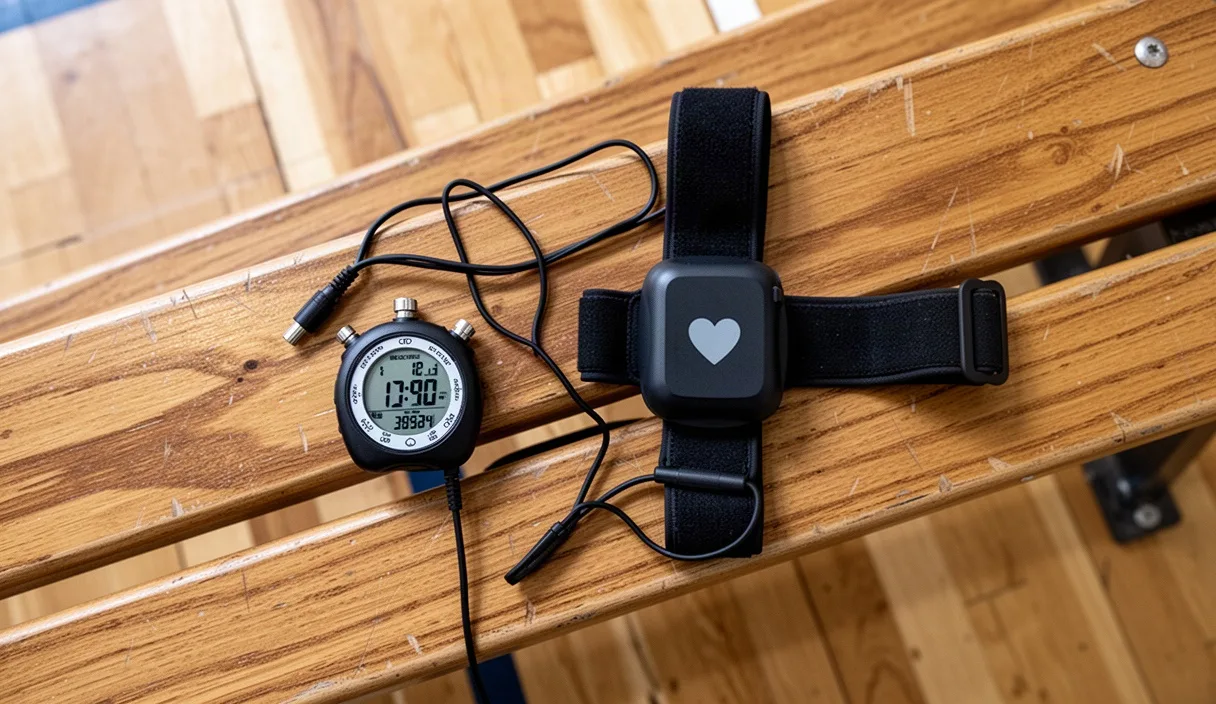
Cadence provides an easy way to measure pace without GPS monitors. A pedometer or simple wristwatch shows your steps per minute. For an average adult, 75 to 85 steps per minute represents a casual stroll. A stimulus pace begins at roughly 102 steps per minute. A brisk stimulus pace sits between 112 and 124 steps per minute. At this tempo, your heart rate increases into 55 to 68 percent of its maximum capacity. This zone produces sufficient cardiac stroke volume to stretch muscular arteries without causing severe fatigue.
You can verify this intensity using the talk test. While walking at a stimulus pace, you can speak four or five words together before you need to catch a breath. You can exchange clear information, but you cannot sing a continuous song. If you can recite a poem without pausing for air, your pace is too slow to condition the vascular bed. If you cannot finish a short four-word sentence, your pace has crossed into high-intensity anaerobic work, which is difficult to maintain for the thirty uninterrupted minutes required for sustained shear stress.
- Casual walk: Under 90 steps per minute; zero change in breathing depth; minimal effect on vessel tone.
- Brisk conditioning walk: 105 to 120 steps per minute; audible breathing, broken speech; sustained nitric oxide release.
- Power walk: 125 to 135 steps per minute; arm drive required; suitable for conditioning, but hard on unprepared ankles and knees.
Timing your walk after midday meals
Blood pressure fluctuates throughout the day following circadian patterns, stress levels, and food intake. After you consume a meal, your gastrointestinal tract requires blood to digest and absorb nutrients. Blood pools in the splanchnic circulation. In healthy individuals, the systemic circulation compensates by constricting other vascular beds to keep systemic blood pressure stable. However, if the meal contains processed starches or simple sugars, glucose enters the bloodstream rapidly.
High blood sugar spikes produce transient endothelial dysfunction. Elevated circulating glucose triggers the production of reactive oxygen species. These oxygen radicals bind to available nitric oxide molecules and deactivate them, forming peroxynitrite. This chemical reaction temporarily strips the blood vessels of their ability to dilate. Post-meal arterial stiffness increases for two to three hours following a heavy carbohydrate lunch.
Taking a brisk walk 15 to 25 minutes after your midday meal counteracts this temporary stiffness. Muscle contractions force glucose transporter type 4 (GLUT4) proteins to migrate to the surface of muscle cells. These transporters clear glucose from your blood without requiring extra insulin. By clearing glucose quickly, you reduce oxidative damage inside the endothelium and protect baseline nitric oxide production. The blood vessels remain supple rather than rigid throughout the afternoon.
Keep your post-meal walking duration between 20 and 35 minutes. Walking for less than 10 minutes does not clear enough circulating glucose to alter postprandial vascular tone. Walking for longer than 45 minutes immediately after a heavy meal can draw too much blood toward the leg muscles, causing stomach cramping or sluggish digestion. A steady, brisk 20-minute walk outside the office or home provides an optimal balance.
How to measure pressure changes accurately at home
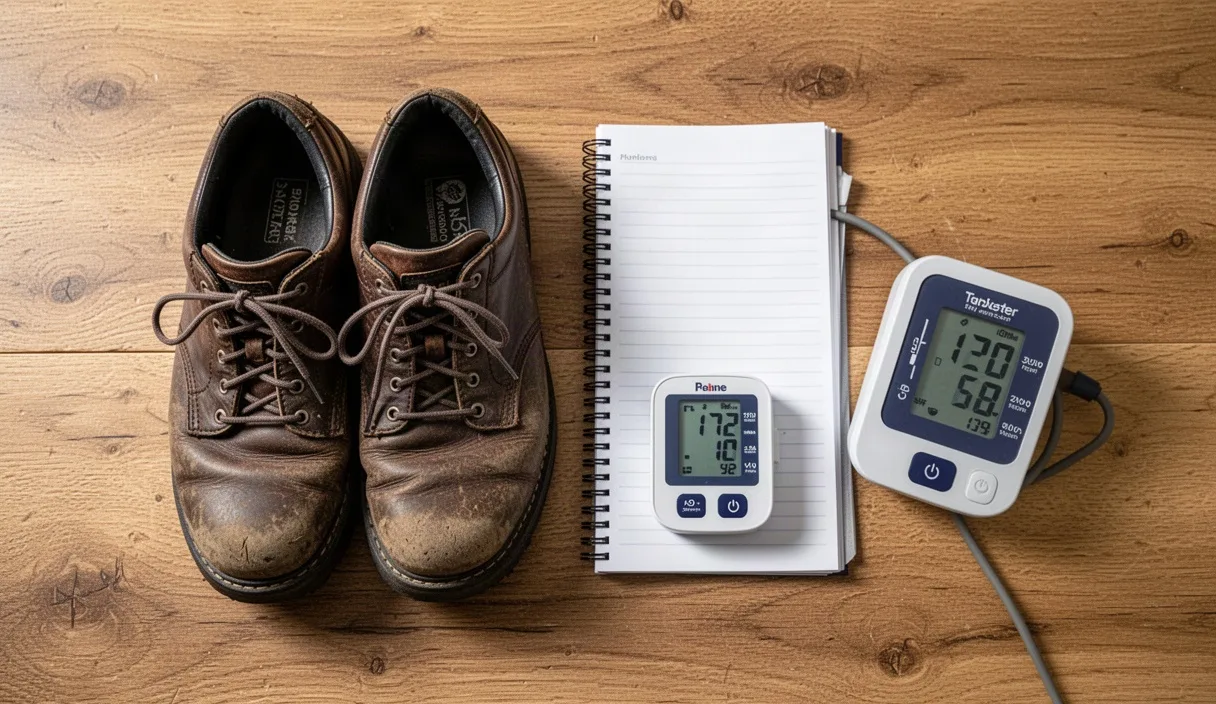
Casual measurements at retail kiosks or using wristbands provide unreliable figures. Wrist devices are sensitive to body position; if the wrist sits two inches below the level of the right atrium, the hydrostatic pressure of the blood column adds up to 4 mm Hg to the reading. To monitor real adaptations from your walking routine, use an automated oscillometric upper-arm monitor that has been clinically validated by an independent registry such as the British and Irish cardiovascular wellness Society or STRIDE BP.
Follow a consistent protocol each time you collect data. Blood pressure reacts instantly to temperature, caffeine, mental stress, and bladder volume. An error in cuff size also distorts values. If the inflatable bladder of the cuff does not encircle 75 to 100 percent of your arm circumference, the machine will overestimate your systolic pressure by 3 to 9 mm Hg.
Preparing for the measurement
Empty your bladder completely. A distended bladder stimulates the sympathetic nervous system and can raise systolic readings by 8 to 14 mm Hg. Do not drink coffee, smoke tobacco, or perform brisk physical exercise within 30 minutes of measuring. Sit in a quiet room with a stable temperature. Place your feet flat on the floor with your legs uncrossed. Rest your back against the chair. Support your tested arm on a table so the center of the upper arm aligns with the middle of your sternum. Sit motionless and silent for five full minutes before pressing the start button.
Executing the reading
Keep your mouth closed and do not speak during the inflation cycle. Take two separate readings, spaced 60 to 90 seconds apart. Record both numbers, along with your pulse rate. If the first two readings differ by more than 5 mm Hg on either systolic or diastolic numbers, take a third reading. Calculate the mathematical average of the two closest readings. That average is your true value for that session.
Maintaining the tracking log
Take readings twice per day: once in the morning within one hour of waking, after urination but before breakfast or medication, and once in the evening before bed. Maintain this record for 14 continuous days before drawing conclusions about your walking program. Brisk walking typically reduces resting systolic pressure by 4 to 8 mm Hg and diastolic pressure by 2 to 5 mm Hg over an eight-week span. If your resting numbers exceed 180 mm Hg systolic or 110 mm Hg diastolic at any point, or if you experience chest tightness, dizziness, or shortness of breath, stop tracking and contact a physician promptly. Do not adjust prescribed cardiovascular wellness medications on your own based on home readings.
Common mistakes with walking posture and footwear
Walking is a natural human movement, but desk work and stiff footwear create mechanical faults that impair cardiovascular efficiency and stress joints.
The most frequent error is overstriding. When people try to walk briskly, they often reach their lead foot too far forward. The heel strikes the ground far in front of the body's center of mass, with an entirely straight knee. This mechanical pattern acts as a brake. It sends an impact shock wave up the tibia to the hip and lower spine. It stops forward momentum, increases ground contact time, and prevents a smooth cadence. To walk faster, do not lengthen your stride forward. Push off with greater intent from the back foot and place the front foot down close to your pelvis with a slightly bent knee.
The second error is carrying tension in the neck, shoulders, and hands. Many walkers tilt their head downward to look at a smartphone or the ground directly ahead. This forward head posture drops the cervical spine out of alignment and compresses the anterior chest wall. It restricts the excursion of the diaphragm, forcing you into shallow chest breathing. Shallow breathing increases sympathetic nervous system tone, which constricts peripheral vessels and directly counters the dilating effect of the walk. Keep your gaze roughly twenty paces ahead. Drop your shoulders down and away from your ears. Keep your hands relaxed, with the fingers loosely curved rather than clenched into tight fists.
Footwear faults also interfere with gait mechanics. Shoes with thick, rigid soles and narrow, tapered toe boxes prevent the foot from spreading naturally. When the big toe cannot engage with the ground during the push-off phase, the calf muscles cannot contract through their full range of motion. This reduces the efficiency of the skeletal muscle pump. Select shoes with a flexible sole that bends easily at the ball of the foot, an unrestrictive toe box, and a low heel-to-toe drop. Avoid heavy work boots or loose slip-ons that cause your toes to curl and grip inside the shoe.
A four-week routine to establish the habit
To produce lasting changes in arterial elasticity, you must build volume systematically. The cardiovascular system adapts to consistent, moderate stress repeated day after day rather than intermittent, punishing sessions.
- Establishing the baseline: Walk for 20 minutes once per day at whatever pace feels natural. Focus on landing softly and keeping your head balanced over your shoulders. Use this time to establish a set point in your schedule, preferably 20 minutes after lunch or dinner.
- Cadence building: Maintain the 20-minute duration, but introduce a metronome app or a step tracker set to 105 steps per minute. Hold this rhythm for the middle 10 minutes of the walk, using the first 5 minutes to warm up and the last 5 minutes to cool down. Check your breathing using the talk test.
- Volume expansion: Extend the walk to 30 minutes daily. Increase the target cadence to 115 steps per minute for 20 continuous minutes. If daytime weather or schedule blocks a single 30-minute block, split the volume into two 15-minute walks: one after lunch and one after dinner. Two 15-minute walks offer nearly identical blood pressure adaptations to a single 30-minute outing.
- Permanent consolidation: Commit to 150 to 180 total minutes of brisk walking per week. Track your blood pressure using the home measurement protocol for seven consecutive days. Compare these numbers against your original starting values. Maintain this weekly walking volume to sustain your vascular gains over the coming years.