Zone 2 cardio is physical work performed at an intensity where muscle cells produce energy primarily through aerobic metabolism. At this pace, the body uses fat as its main fuel source and clears lactate as fast as the working muscles generate it. This keeps blood lactate concentrations low and stable throughout the session. The intensity feels easy, but it builds the cellular machinery required for endurance, heart health, and metabolic control.
Most untrained people exercise too hard on easy days. They push into higher heart rate zones because moving slowly feels unproductive. This habit skips the specific cellular adaptations that only occur during steady low-intensity work. Understanding the physiology of Zone 2, finding your individual target heart rate, and sticking to an exact weekly schedule will build an aerobic base without excess fatigue.
What happens inside muscle cells in Zone 2
Skeletal muscle contains two primary types of fibers: Type I slow-twitch fibers and Type II fast-twitch fibers. Zone 2 exercise relies almost entirely on Type I fibers. These fibers contain high concentrations of mitochondria, which are the specialized structures inside cells that consume oxygen to produce adenosine triphosphate, or ATP. Type I fibers also contain high amounts of myoglobin, an iron-bound protein that transports oxygen from the blood directly into the mitochondria.
During low-intensity work, muscle cells mobilize fatty acids from fat tissue and intramuscular lipid droplets. An enzyme called carnitine palmitoyltransferase-1, or CPT-1, carries these long-chain fatty acids across the mitochondrial membrane. Inside the mitochondria, the fatty acids undergo beta-oxidation to generate ATP. This process requires a steady supply of oxygen, but it produces a large amount of energy per molecule of fuel without generating excess metabolic byproducts.
Lactate metabolism is the second key event happening inside the cell. When muscles contract, glycolysis breaks down glucose and produces pyruvate. Some of this pyruvate converts into lactate and hydrogen ions. Type I muscle fibers contain monocarboxylate transporter 1 proteins, known as MCT-1. These transporters pull lactate out of the blood and into the mitochondria of the slow-twitch fibers. The mitochondria convert that lactate back into pyruvate and burn it for fuel. In true Zone 2, your MCT-1 transporters clear lactate at the exact rate your glycolytic fibers generate it. Blood lactate stays stable between 1.5 and 2.0 millimoles per liter.
Consistent training at this intensity triggers mitochondrial biogenesis. The cell produces more mitochondria, expands the size of existing mitochondria, and multiplies the network of capillaries surrounding each muscle fiber. More capillaries mean shorter transit distances for oxygen to travel from red blood cells into the working tissues. Over months of training, the muscle gains the ability to burn fat at higher walking or cycling speeds before switching over to glycogen.
The nasal breathing test versus heart rate formulas
Standard formulas estimate heart rate zones by subtracting your age from a fixed constant. The most common formula subtracts age from 220. A 45-year-old using this formula gets an estimated maximum heart rate of 175 beats per minute. Zone 2 is often calculated as 60 percent to 70 percent of that number, giving a target range of 105 to 123 beats per minute. Another popular equation, the Tanaka formula, calculates maximum heart rate as 208 minus 0.7 times age. For that same 45-year-old, the Tanaka formula predicts a maximum of 177 beats per minute.
These formulas are population averages. They carry an error margin of 10 to 12 beats per minute in either direction. A person with a naturally small heart volume may have a true maximum heart rate of 195 beats per minute, while another healthy person of the same age may top out at 162 beats per minute. Relying solely on a mathematical formula often causes one athlete to train too hard and another to train below their threshold.
Field tests provide a direct physiological check without expensive blood testing gear. The nasal breathing test and the conversational talk test track ventilation rates, which correlate directly with blood carbon dioxide and lactate levels.
| Testing Method | Equipment Needed | Reliability | Primary Limitation |
|---|---|---|---|
| Standard Formula (220 - Age) | Heart rate monitor | Low | Ignores individual resting and max heart rate differences |
| Tanaka Formula | Heart rate monitor | Moderate | Still relies on statistical averages rather than individual biology |
| Nasal Breathing Test | None | Moderate to High | Restricted by nasal passage anatomy or seasonal congestion |
| Conversational Talk Test | None | High | Requires honesty about breathing comfort while speaking |
| Blood Lactate Meter | Lactate strips, lancets, handheld reader | Very High | Requires finger-prick blood draws during the training session |
To use the nasal breathing test, close your mouth and inhale and exhale exclusively through your nose during exercise. If you feel air hunger and must open your mouth to draw breath, you have crossed above your aerobic threshold. Carbon dioxide has accumulated in your blood, triggering your brainstem to increase ventilation volume.
To use the conversational talk test, recite a standard sentence aloud, such as the Pledge of Allegiance or a four-sentence paragraph from a book. In Zone 2, you can speak in full, uninterrupted sentences. Your voice will sound slightly strained compared to sitting in a chair, but you do not need to pause mid-sentence to gasp for air. If you can only speak four or five words before drawing a breath, your intensity is too high.
Choosing between cycling, rowing, and incline treadmill
Zone 2 training requires steady, uninterrupted work. Equipment that spikes your heart rate on small errors makes it difficult to stay in the zone. You must pick a machine that fits your current body weight, joint tolerance, and movement skill.
The incline treadmill is the most accessible choice for people without specialized sports skills. Walking up an incline increases cardiovascular workload without the repetitive landing forces of running. Set the treadmill speed between 2.8 and 3.5 miles per hour. Adjust the incline between 3 percent and 8 percent to bring your heart rate to your target level. Keep your hands off the handrails. Holding the handrails reduces the muscular work of your hips and calves, which lowers your heart rate and defeats the purpose of the setting.
The stationary cycle removes joint impact entirely and provides strict control over mechanical workload. You set the resistance on an ergometer, and the heart rate response follows predictable patterns. Keep your pedaling cadence between 80 and 90 revolutions per minute. Pedaling below 65 revolutions per minute against heavy resistance increases muscular tension in the quadriceps. That high local force compresses small blood vessels, restricts oxygen delivery, and causes local lactate accumulation even when your overall heart rate looks low.
The rowing machine engages the legs, hips, back, and arms simultaneously. Because it spreads work across large muscle groups, it can build strong aerobic capacity. However, rowing requires consistent technical skill. If your stroke technique degrades as you tire, your lower back absorbs excessive shear stress. Untrained rowers also tend to pull in short, erratic bursts. These bursts spike blood pressure and drive heart rates above the aerobic threshold. Choose rowing only if you can maintain technical form for 40 straight minutes.
| Modality | Skill Requirement | Impact on Joints | Ease of Heart Rate Control |
|---|---|---|---|
| Incline Treadmill Walking | Very Low | Low | High |
| Stationary Bike | Low | None | Very High |
| Rowing Machine | Moderate to High | Low | Moderate |
Weekly volume targets for sedentary adults
Building mitochondria takes time under tension. Short bursts of 10 or 15 minutes offer general health benefits, but they do not supply the sustained stimulus needed to expand mitochondrial density. A single Zone 2 session should run for at least 35 to 45 minutes. A duration of 60 minutes is the standard target once your body tolerates the position.
Sedentary adults should aim for a total weekly volume of 150 to 180 minutes of Zone 2 work. Do not jump to this volume immediately if you currently sit for most of the day. Connective tissues, tendons, and sitting posture need weeks to adapt to continuous loading. Use a structured four-week progression to build your capacity safely.
- Establish baseline tolerance: Complete three sessions per week of 30 minutes each. This yields 90 minutes of total weekly work. Keep three days between sessions if you experience joint soreness.
- Extend session duration: Increase each of the three weekly sessions to 40 minutes. This brings your weekly volume to 120 minutes. Maintain this schedule for two consecutive weeks.
- Add a fourth training day: Perform three sessions of 40 minutes and add one shorter session of 30 minutes on the weekend. Total weekly volume reaches 150 minutes.
- Reach full target volume: Shift to two 45-minute sessions and one 60-minute session, or maintain four 45-minute sessions. This secures 180 minutes of weekly aerobic base training.
Distribute these sessions throughout the week rather than doing two long sessions on the weekend. Spreading the work across three or four days signals your muscle cells to produce metabolic enzymes on a continuous schedule. It also limits cumulative orthopedic fatigue.
Signs you are working above the aerobic threshold
The boundary between Zone 2 and Zone 3 is the aerobic threshold, also called the first ventilatory threshold. When you cross this line, your Type II motor units join the effort. Carbohydrates become the dominant fuel, and blood lactate rises above baseline. Watch for clear physical markers during your session that tell you when you have drifted too high.
- Loss of rhythmic nasal breathing: You suddenly need to open your mouth to swallow air or inhale. This is the earliest sensory signal of crossing the threshold.
- Fragmented speech patterns: You can no longer finish a full sentence without pausing to take a breath between words.
- Localized muscle burning: Your quadriceps or calves feel warm, tight, or fatigued. Zone 2 exercise produces almost no local muscular burning sensation because hydrogen ions are not accumulating.
- Cardiac drift under steady mechanical work: Your treadmill speed or cycling wattage remains identical, but your heart rate climbs by 8 to 15 beats over a 15-minute window. This indicates heat accumulation, dehydration, or excessive sympathetic nervous system activation.
- Excessive post-workout hunger: Crossing into Zone 3 drains liver and muscle glycogen rapidly. If you leave a 45-minute session with intense sugar cravings and shaky hands, you worked above Zone 2.
If you notice any of these signs, adjust your machine immediately. Drop the treadmill incline by 2 percent, lower the bike resistance by two clicks, or reduce your cycling cadence. Do not wait for your heart rate monitor to confirm the change. Your breathing changes before your wrist sensor catches up.
Common mistakes
The most frequent error in low-intensity training is letting pace dictate effort. If you set a goal to walk at 3.5 miles per hour, but you slept poorly, felt work stress, or drank extra caffeine, that exact pace may push your body into Zone 3 today. Train by internal physiological response, not external speed metrics.
Another common mistake is skipping the warm-up period. Cold muscles rely more heavily on anaerobic pathways for the first 8 to 10 minutes of movement. If you step onto a machine and immediately jump to your target wattage or incline, your blood lactate will spike early. It can take 20 minutes of easy movement for that early lactate to clear. Spend 10 minutes moving at a warm-up pace that sits well below your target Zone 2 heart rate before you begin your session timer.
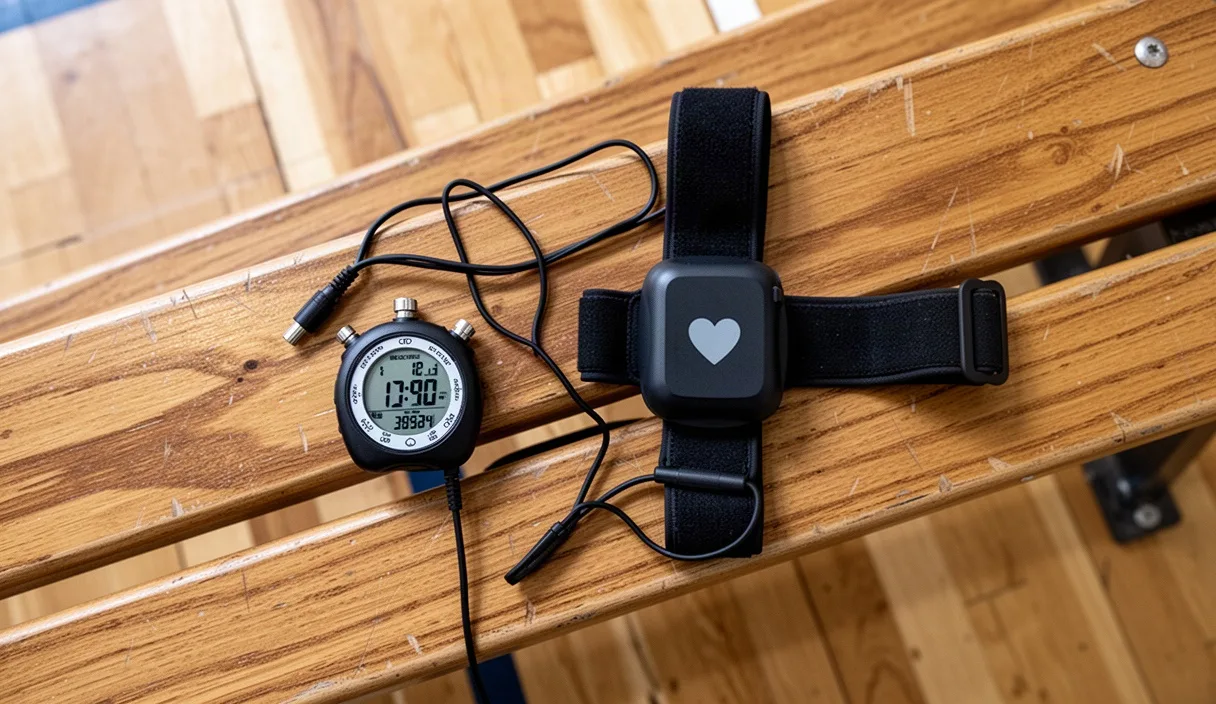
Relying on wrist-based optical sensors during cycling or rowing often produces inaccurate data. Gripping a handlebar or rowing handle flexes the forearm muscles and restricts blood flow in the wrist skin. This causes optical monitors to drop heart rate readings or latch onto the mechanical cadence of the stroke instead. Use an electrical chest strap monitor paired to your machine or watch for accurate data.
Next steps for your training
Begin by selecting one primary piece of equipment from the options described above. If you have any history of cardiovascular symptoms, joint disorders, or chronic medical conditions, consult a physician before starting an endurance program.
For your first session, put on a chest strap monitor and warm up for 10 minutes at a very easy effort. Gradually increase your work output until you can talk in full sentences, but you can feel your breathing deepen. Check your heart rate at this point and write the number down in a logbook. This is your baseline training anchor for the current month.
Schedule three 30-minute training windows into your calendar for the coming week. Treat these sessions as fixed appointments. Keep the effort easy, monitor your breathing continuously, and build the physical consistency that turns slow cardiovascular work into long-term metabolic health.